

AI In Healthcare Marketing: What’s Making An Impact In 2026

Lydia Eler
16/07/2026
Table of Content
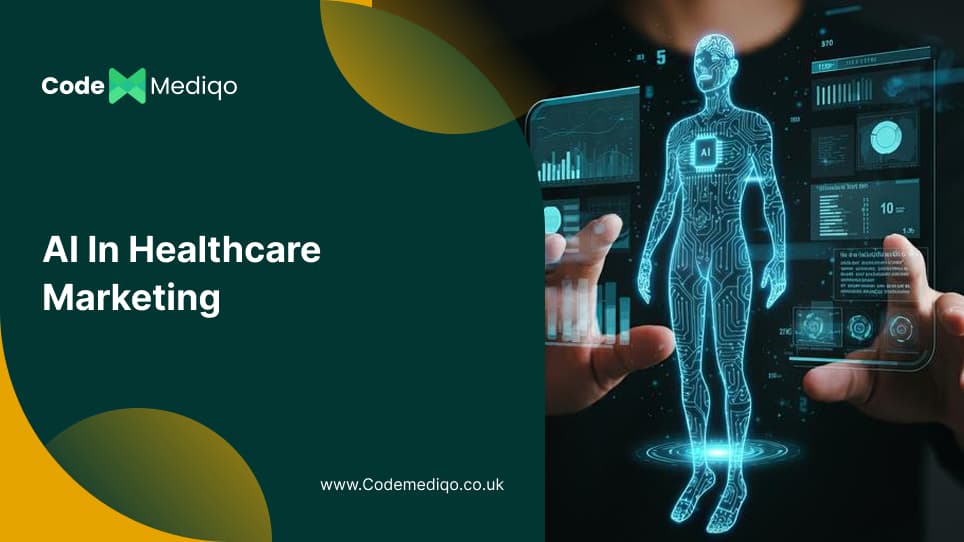
AI has moved from a talking point to a working part of healthcare marketing. UK practices are using it every day now, often without even labelling it as “AI.” But not every use of AI actually helps a practice win more patients. Some genuinely change the game. Others create real risk in a sector that cannot afford to get things wrong.
Here is what is actually making a difference in 2026, and what deserves more care than excitement. This matters more for healthcare than almost any other industry. A wrong recommendation from an AI tool in retail costs a sale. A wrong claim from an AI tool in healthcare can cost a patient’s trust, or worse, their health.
What Is AI in Healthcare Marketing?
AI in healthcare marketing means using tools that can write, personalise, or predict, to help a practice reach and convert patients faster. This covers everything from chatbots on a website to the systems that decide which Google ad to show to which person.
Used well, it saves time and improves results. Used carelessly, in a sector where misinformation can cause real harm, it can damage trust just as quickly as it builds it.
For most UK practices, AI in healthcare marketing shows up in ordinary, practical ways: a chatbot that answers a booking question at 11 pm, an ad platform that decides who sees which advert, or a tool that drafts a first version of a blog post. None of this needs to feel complicated once you see it broken down.
How AI Has Changed Patient Search
Before looking at marketing tools, it helps to understand the biggest shift: how patients search has changed, not just how practices market.
Google Now Answers Questions Directly
Google’s AI Overviews now answer many health questions right on the search page, pulling facts from several sites before anyone clicks a single link. Fewer people click through when a summary already answers their question.
This changes what “ranking well” means. Being cited inside one of these summaries now matters as much as ranking first. That depends on how clearly a page answers a specific question and how trustworthy the source looks.
Practices still writing vague, sales-heavy pages are becoming harder to find in this new layer of search, no matter how high they used to rank in the old way. The pages winning here answer one clear question, near the top, in plain words.
The Rise of AI Shopping for Care
A newer shift is patients asking an AI assistant to find care directly: a specialist nearby, who takes a certain insurer, with strong reviews. This is different to a normal Google search, and old SEO tricks alone will not reach it.
To show up here, your practice’s basic details, such as opening hours, services, and insurers accepted, need to match exactly across your website and every directory. If an AI tool finds conflicting details, it tends to skip your practice and recommend someone else instead.
This makes accuracy a marketing job now, not just an admin task. A single outdated phone number on an old directory listing can quietly cost you patients you never even knew you were losing.
Where UK Healthcare Marketers Are Using AI Today
Away from search, real AI use in UK healthcare marketing sits in a few clear places.
Content and Personalisation
AI tools now help teams draft and reshape content faster, though every claim still needs checking by someone with real clinical knowledge before it goes live. Personalised content, such as a website that shows different messaging based on the service someone viewed, is another growing use, as long as no sensitive health data gets used in ways that break data rules.
Chatbots and Booking Tools
AI chatbots now handle many of the routine questions that used to tie up reception staff: opening hours, parking, and what to bring to a first appointment. This frees staff to focus on patients with more complex needs.
The best-performing chatbots are honest about what they are. A short line such as “I’m an assistant, and a member of the team will follow up personally” tends to build more trust than a bot pretending to be a real person.
Paid Ads and Reputation Management
AI-driven bidding on Google and Meta is now standard practice, helping smaller practices compete for attention without a huge budget. AI tools also now flag new reviews across platforms and suggest replies, so reputation management runs consistently instead of getting missed during a busy week.
This matters because reviews feed directly into local search rankings. A practice that keeps on top of its reviews, with AI helping spot patterns and draft first responses, tends to build both trust and visibility faster than one relying on staff remembering to check now and then.
AI Use | Good For | Needs a Human Check |
Drafting blog content | Speed, first drafts | Yes, always, before publishing |
Personalised website messaging | Relevance, engagement | Only if health data is involved |
Chatbots | Routine questions, booking | Handover to a real person for anything clinical |
Ad bidding | Efficient spend | Occasional review of targeting settings |
Review replies | Consistency, speed | Spot-check tone before sending |
The Risks You Cannot Ignore
None of this comes free of risk, and healthcare has less room for error than almost any other sector.
Wrong Information, Real Harm
AI tools can produce confident-sounding but wrong information. A false claim about a treatment or medication is not a small mistake here; it can genuinely hurt someone. The only safe rule is simple: no AI-written healthcare content goes live without a proper clinical check.
Patient Trust
Patients seem fine with AI handling admin tasks, but many still feel uneasy about AI making anything that feels personal or clinical. Being open about where AI is used, such as an early chatbot, and where a real clinician takes over, builds more trust than trying to hide the handover.
There is also a gap worth watching between how confident a marketing team feels about a new AI tool and how patients actually experience it. A chatbot might feel impressive internally, but if it gives one wrong or oddly worded answer during a sensitive moment, that one bad experience can outweigh months of otherwise good service.
UK Rules That AI Guides Often Miss
Type “AI marketing rules” into Google, and nearly everything that comes back assumes an American audience. None of it accounts for how the UK actually regulates healthcare advertising.
Two things matter here specifically:
- UK data protection law limits how patient data can feed AI-driven targeting. Assuming a global AI tool is automatically compliant has already caught out several UK healthcare brands.
- GMC guidance treats AI-assisted marketing exactly like human-written marketing. The clinician stays responsible for it, whoever or whatever wrote it.
This matters because AI tools are often trained mostly on content from markets with looser advertising rules. Left unchecked, they tend to suggest exactly the confident, guarantee-heavy language that breaches the CAP Code here, simply because that pattern is common in the material they learned from.
How to Prepare Your Content for AI Search
A few practical steps improve how well AI systems find and use your practice’s content:
- Write clear headings that directly answer one specific question each, rather than long, unstructured paragraphs
- Add structured data (schema markup) for your services, hours, and reviews, giving AI tools clean facts to work from
- Keep every detail about your practice the same across your website, Google Business Profile, and major directories
- Update old content regularly rather than leaving it untouched for years
A single mismatched detail, such as an old phone number on one directory, is often enough for an AI system to leave your practice out of its answer entirely.
Quick Questions Answered
Is AI safe to use in healthcare marketing content?
Yes, use of AI in healthcare marketing as a starting point for drafts, but every piece needs a clinical review before publishing. Never publish AI-written health content unchecked, no matter how polished or convincing it reads.
Will AI Overviews replace SEO for medical practices?
No, but they change what good SEO looks like. Clear, well-structured, trustworthy content still wins, whether it is cited in an AI summary or ranked as a traditional link.
What is the biggest AI mistake healthcare marketers make?
Assuming a global AI tool automatically follows UK rules. GDPR, GMC guidance, and the CAP Code still apply, whether a human or an AI wrote the content.
Summary
AI in healthcare marketing search behaviour is changing, content tools are speeding up production, and new risks around accuracy and trust are all happening at once. The practices that benefit most are not the ones adopting every new tool first.
If you want help working out which AI tools are actually worth using in your practice’s marketing, and which ones create more risk than reward, a proper review is the fastest way to find out, before a fast decision turns into a slow, costly mistake.
Digital Transform with Us
Please feel free to share your thoughts and we can discuss it over a cup of coffee.
Related Articles

Let's Build Something Exceptional!
Tell us where your healthcare brand needs to grow: more patients, stronger search rankings, better-converting website, or smarter ad spend.
Contact
Tell Us What you need.
Our team is ready to assist you with every detail